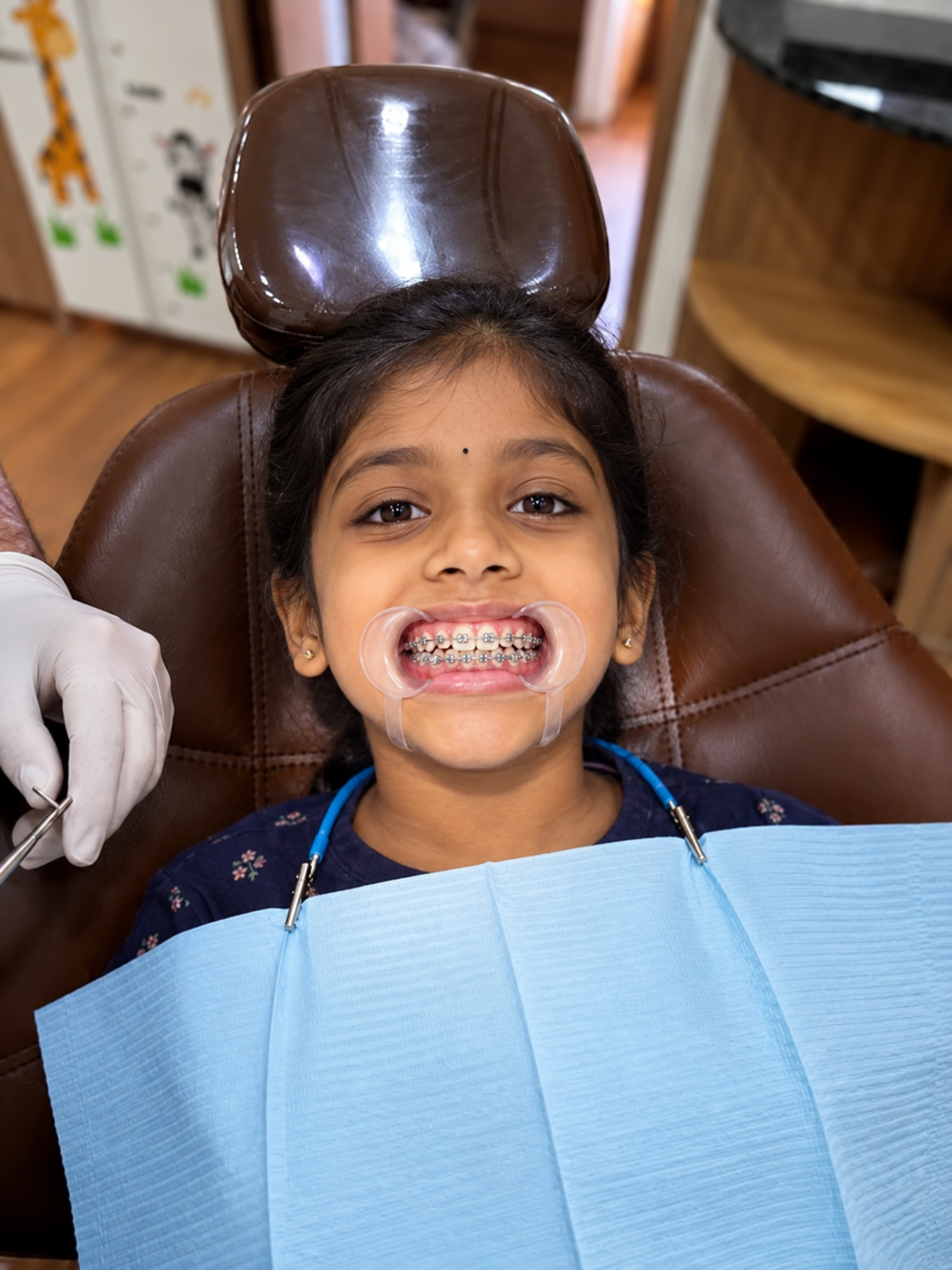
Orthodontic problems are easier to correct when caught early. Dr. Mittal identifies developing issues from age 6 to 7 — before they become structural — and plans treatment that works with the child's natural growth rather than against it.
When to Begin Treatment
Phase 1: Early Intervention (Ages 7–10)
Phase 1 treatment uses removable or fixed appliances to guide jaw growth and create space while the child is still developing. Not every child needs Phase 1 — but for those who do, early action prevents more invasive treatment later.
- Crossbites — fixed when the bite pattern is narrow; left untreated, they cause asymmetric jaw growth.
- Severe crowding — space is created for permanent teeth before they erupt, reducing the chance of extractions.
- Skeletal discrepancies — upper or lower jaw position issues are most responsive to growth modification at this stage.
- Thumb or finger habits — if habits have caused bite deformation, habit appliances correct the bone changes.
Phase 2: Full Orthodontic Treatment (Ages 12–14)
Once all permanent teeth are in, comprehensive braces or aligner treatment aligns all teeth, fine-tunes the bite, and achieves the final result. Phase 2 follows Phase 1 if one was done, or begins at this stage if early intervention was not needed.
The American Association of Orthodontists recommends an orthodontic screening by age 7. At this age, the first permanent molars and incisors have arrived — enough to assess jaw width, bite, and emerging crowding. Catching problems at 7 does not mean treatment begins at 7; it means we have a plan before the window closes.
Types of Braces
Metal Braces
The most effective and durable option. Modern metal brackets are smaller, lower-profile, and less noticeable than older designs. For children and adolescents with complex bite issues, metal braces deliver the most precise control. Coloured elastics are popular with younger patients.
Ceramic (Tooth-Coloured) Braces
Ceramic brackets match the tooth colour, making them less visible. They are a good choice for adolescents who want a more discreet option but still need the reliability of fixed braces. They require slightly more careful hygiene as the brackets can stain with certain foods.
Clear Aligners for Teens
A series of clear, removable trays that progressively move teeth. Best suited for moderate crowding and spacing without complex bite issues. Requires strong compliance — the trays must be worn 20 to 22 hours daily to work. We assess readiness carefully before recommending aligners for adolescents.
Retainers
Why Retainers Are Non-Negotiable
Teeth have a natural tendency to shift after braces are removed. This is biology, not failure. Retainers hold the corrected position while the bone and fibres stabilise. Skipping or inconsistent retainer wear is the most common reason orthodontic results are lost.
Types of Retainers
- Fixed (bonded) retainer — a thin wire bonded behind the front teeth; requires no patient action and works continuously. Recommended for cases with a high relapse risk.
- Removable Hawley retainer — durable acrylic and wire plate worn at night; can be adjusted if minor shifts occur.
- Clear removable retainer — similar material to aligners; worn at night; must be replaced when worn out or damaged.
Treatment Timeline
| Phase | Typical Age | Duration | What Happens |
|---|---|---|---|
| Screening | 7 years | 1 visit | Assess jaw width, bite, and emerging crowding. Most children are simply monitored. |
| Phase 1 (if needed) | 7 – 10 years | 9 – 12 months | Expanders, space maintainers, habit breakers — intercept problems while jaws are growing. |
| Rest period | 10 – 12 years | 12 – 24 months | Monitoring while remaining permanent teeth erupt. No active appliance. |
| Phase 2 (comprehensive) | 11 – 14 years | 18 – 24 months | Full braces or clear aligners. Align all permanent teeth and achieve final bite correction. |
| Retention | After braces | Lifelong | Retainers hold the result. Teeth shift without retention — this phase is as important as treatment. |
Caring for Braces: Do’s and Don’ts
- Brush after every meal — use the provided interdental brush around each bracket
- Wear all elastics exactly as prescribed — skipping elastics extends treatment time
- Use orthodontic wax on any bracket or wire causing soreness
- Attend all adjustment appointments — every visit moves treatment forward
- Rinse with water after eating if brushing is not immediately possible
- Eat hard foods (raw carrots, hard biscuits, crusty bread, ice)
- Eat sticky foods (toffee, chewing gum, fruit leather, caramel)
- Play with brackets using your tongue or fingers
- Remove elastics without being instructed to do so
- Skip brushing at night — plaque around brackets causes permanent white-spot scars on enamel
What Parents Say
“We started phase 1 orthodontics at age 8 for my daughter’s crossbite. Avoided jaw surgery that another doctor had mentioned. Dr. Mittal’s interceptive approach at the right age made all the difference.”
“My son’s teeth were very crowded. The team monitored from age 7, waited for the right window, then started treatment at 11. Every step was explained clearly, costs were transparent, no surprise escalations.”
“Dr. Mittal emphasised the retainer phase as much as the braces. We followed through and my daughter’s teeth stayed in perfect position. That commitment to the full treatment arc is what sets this clinic apart.”
Frequently Asked Questions
Some crowding is genetic and unavoidable. But many alignment problems can be minimised by intervening early: removing over-retained baby teeth at the right time, correcting harmful oral habits, and expanding a narrow palate while it is still flexible. An orthodontic screening at age 7 identifies the cases where early action will meaningfully reduce the complexity of later comprehensive treatment.
Yes, during treatment. Avoid very hard foods — raw carrots, hard biscuits, ice — that can pop brackets off wires, and sticky foods — toffee, chewing gum — that dislodge adhesive. Soft foods — dal, rice, curd, cooked vegetables, soft chapati — are all fine throughout treatment. We provide a printed food guide at the bonding appointment and explain the reason behind each restriction.
Related treatments: